

Healify — AI-Powered Health Companion
Built an AI-driven mobile app that empowers users to improve their health through personalized insights based on real data from Apple HealthKit, blood tests, and lifestyle factors. Client raised $2M in funding following MVP launch.
Technology
AI Integration
Mobile App Development
MVP Development
About the Client
Healify
Healify is an AI-powered health companion app that empowers users to improve their health through personalized insights. The platform integrates with Apple HealthKit to analyze data from wearables, blood test results, and lifestyle factors.
Founded with a vision to democratize health insights, Healify uses advanced AI technologies including OpenAI, LangChain, and Pinecone to deliver recommendations for preventive care. Our AI integration services helped bring this vision to life.
Results
$2M
Funding raised post-MVP
6 months
From idea to MVP launch
Multi-agent AI
LangChain orchestration
HealthKit
Apple Health integration
Goal & Outcome
Goal
The health and wellness space is crowded with generic fitness trackers and calorie counters. Healify's founders envisioned something different: an AI-powered health companion that analyzes real health data from wearables, blood tests, and lifestyle factors to deliver truly personalized recommendations.
The technical challenge was building a sophisticated AI system that could understand complex health metrics, process diverse data sources, provide accurate recommendations without medical liability, and do it all within a mobile app that feels simple and intuitive.
Outcome
Built an AI-driven mobile application using our AI integration expertise with React Native, LangChain, and OpenAI to create a multi-agent "AI orchestra" that processes health data intelligently.
Integrated with Apple HealthKit to automatically sync activity, sleep, and nutrition data. Developed custom blood test analysis that lets users upload lab results for AI-powered dietary and fitness recommendations. Created a smart meal planner that generates personalized recipes, grocery lists, and cost estimates tailored to individual health data.
Our MVP development approach delivered a fully functional product that impressed investors. Healify raised $2M in funding following MVP launch within 6 months.
Transformation Overview
Traditional Process
Digital Solution
Process Flow
01
Discovery & Planning
Defined technical documentation, feature scope, and delivery roadmap. Established a scalable modular architecture to support future AI expansion.
02
AI Architecture Design
Built a multi-agent AI system using LangChain to process user inputs, classify messages, and intelligently decide between database data, user prompts, or AI-generated insights.
03
HealthKit Integration
Integrated Apple HealthKit to sync activity, sleep, nutrition, and heart rate data in real time, feeding continuous updates into the AI analysis engine.
04
AI Model Optimization
Optimized AI models for performance and cost-efficiency using prompt engineering, caching, and testing multiple configurations. Built admin tools for health metric monitoring.
05
Feature Development
Developed blood test analysis and AI-powered meal planning with recipes, grocery lists, and cost estimation based on user health data.
06
MVP Launch & Funding
Delivered a production-ready MVP that validated the concept, impressed investors, and helped secure $2M in funding.
Key Features:
Connected with Apple HealthKit to sync data like activity, sleep, and nutrition from iPhones and Apple Watches.
Leveraged OpenAI, LangChain, and Pinecone to analyze anonymized health metrics and deliver personalized lifestyle recommendations.
Enabled users to upload blood test results, which the AI analyzes to refine diet and fitness suggestions.
Automatically generates meal plans with recipes, grocery lists, and cost estimates tailored to individual health data.
Need a Rewards Platform?
We build gaming apps, loyalty programs, and reward systems from MVP to scale — with 6M+ users across our projects.

Under the Hood
AI & Backend Tech Stack
Technologies used to build an AI-powered platform including React Native for mobile, NestJS for backend architecture, and advanced AI tooling with OpenAI, LangChain, and Pinecone vector database.

React Native

NestJS

OpenAI

LangChain

Pinecone
Technical Implementation
Message Classification System
We classify each user message to determine whether it's a question, a health-metric update, or a general thought. Based on this classification, the backend decides whether it has enough data from the health-metrics database to generate an answer, needs to request additional input from the user, or should rely on AI to provide a recommendation.
AI Experimentation
Tested multiple model configurations to balance accuracy and cost-effectiveness at scale. Experimented with different OpenAI models, prompt engineering techniques, and caching strategies to optimize both user experience and operational costs.
Admin Dashboard
Built an advanced admin dashboard that allows the team to define custom thresholds for different health metrics, enabling more precise monitoring and tailored recommendations for different user segments.
Performance Optimization
Streamlined backend and API architecture to ensure smooth, responsive user experiences. Implemented efficient data caching, background sync, and optimized AI query patterns to minimize latency.
Development Team
Development Rituals:
- Bi-weekly sprints with demos and planning sessions
- Daily check-ins with developers and QA
- Regular AI model performance reviews
FaQ
How much does AI health app development cost?
AI health app development costs vary based on complexity, AI integration, and data sources. Typical platforms range from $80,000 to $300,000+ depending on HealthKit integration, backend infrastructure, and compliance requirements. Learn more about MVP development .
What AI technologies do you use for health apps?
We use OpenAI GPT models for natural language understanding, LangChain for AI orchestration, Pinecone for vector storage, and LangGraph for complex workflows. Integrations like Apple HealthKit ensure real-time health data synchronization.
How long does it take to build an AI-powered health app?
Basic AI health apps take 3–4 months, while advanced platforms with multiple AI agents and integrations require 5–8 months. Learn about our development process .
Can you integrate with Apple HealthKit and wearables?
Yes, we integrate Apple HealthKit to sync activity, sleep, heart rate, nutrition, and other metrics from iPhones and Apple Watch devices, enabling AI-driven health insights.
How do you handle health data privacy and security?
We implement end-to-end encryption, secure APIs, HIPAA-compliant architecture, anonymization for AI processing, and regular security audits to protect sensitive health data.
What’s the difference between rule-based and AI-powered health apps?
Rule-based apps follow fixed logic, while AI-powered apps analyze user data patterns to deliver personalized, evolving recommendations and deeper insights over time.
Can you build an AI health coach for Android and iOS?
Yes, we use React Native to build cross-platform apps for iOS and Android with a shared codebase. Explore our mobile development approach .
How do AI health recommendations work?
We use a multi-agent system: input classification, health data retrieval, AI analysis, and personalization layers that continuously improve recommendations as more user data is collected.
What types of AI health features can you develop?
We build features like blood test analysis, meal planning, activity tracking, sleep insights, medication reminders, symptom checkers, AI health assistants, and predictive analytics.
Do you have experience raising funding for health tech apps?
Yes, we build MVPs designed to attract investors with strong UX, scalable architecture, and clear value. Learn about our MVP process .

Your Free Trial Sprint
Meet your team
Slack channel, assigned developer, daily standups. First code committed to your GitHub.Working prototype delivered
Technical spike or prototype complete. Architecture + budget roadmap for the full build.You keep everything. Zero cost. Zero commitment.
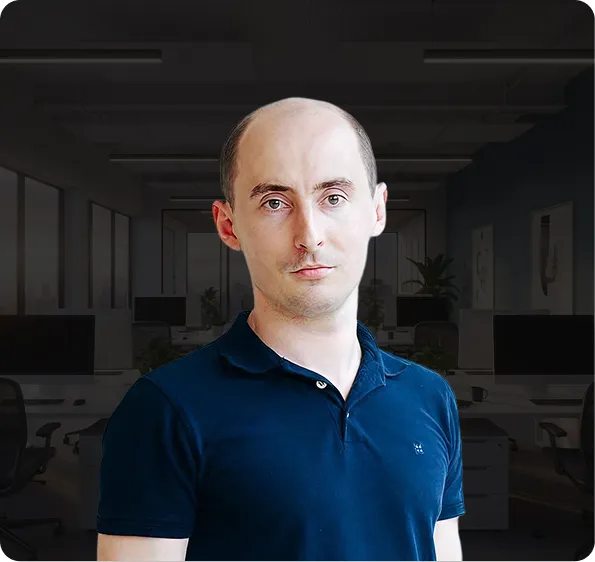
Oleg Kalyta
Founder & AI Lead- 1.You submit—We review within 24 hours
- 2.15-minute scoping call—We align on trial goals
- 3.Developer assigned—Within 48 hours
- 4.Working code in your repo—By end of Week 1