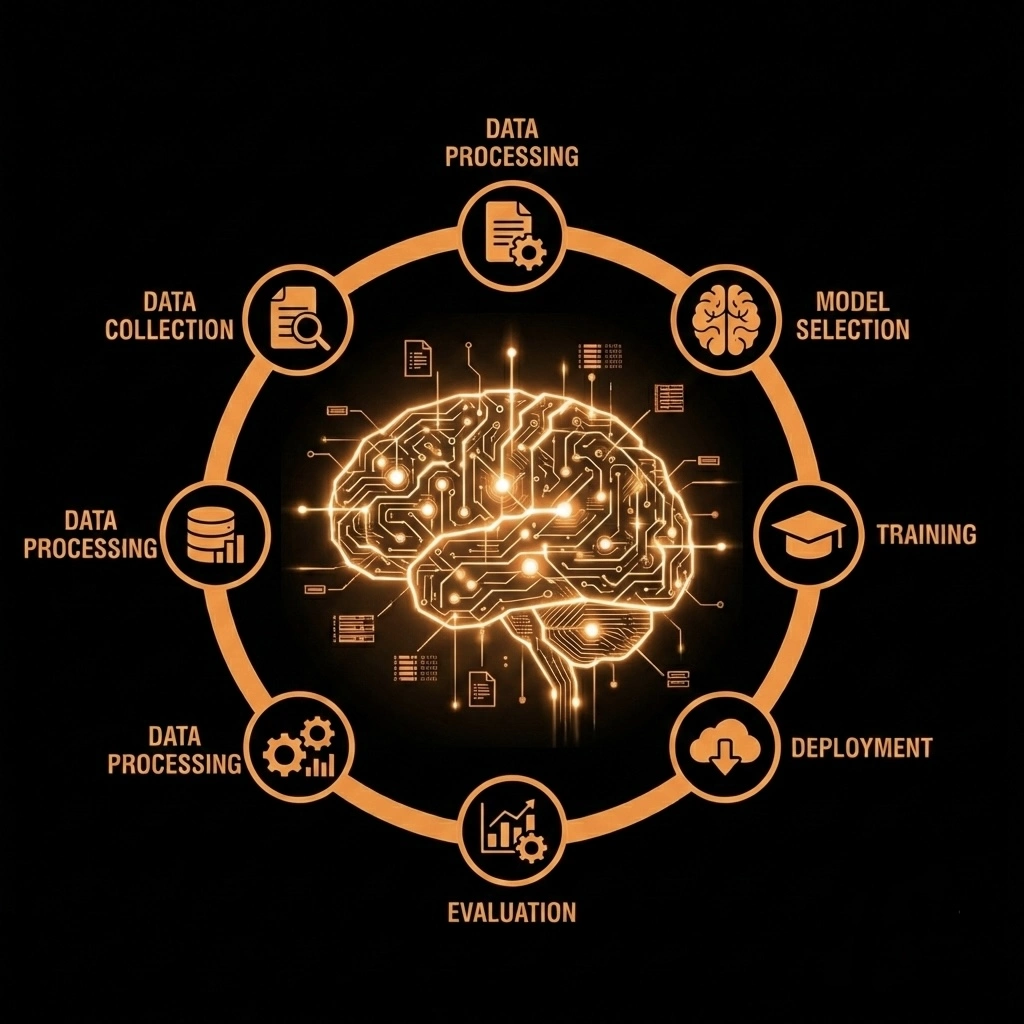




Recent surveys show that while lots of companies are keen on trying out an intelligent AI agent, only a handful are really using it on a large scale. About 62% of companies are just experimenting with AI agents, and only 23% have actually used them in a real business process. It’s as if people are curious about the potential of AI, but are being a bit cautious about how to use it.
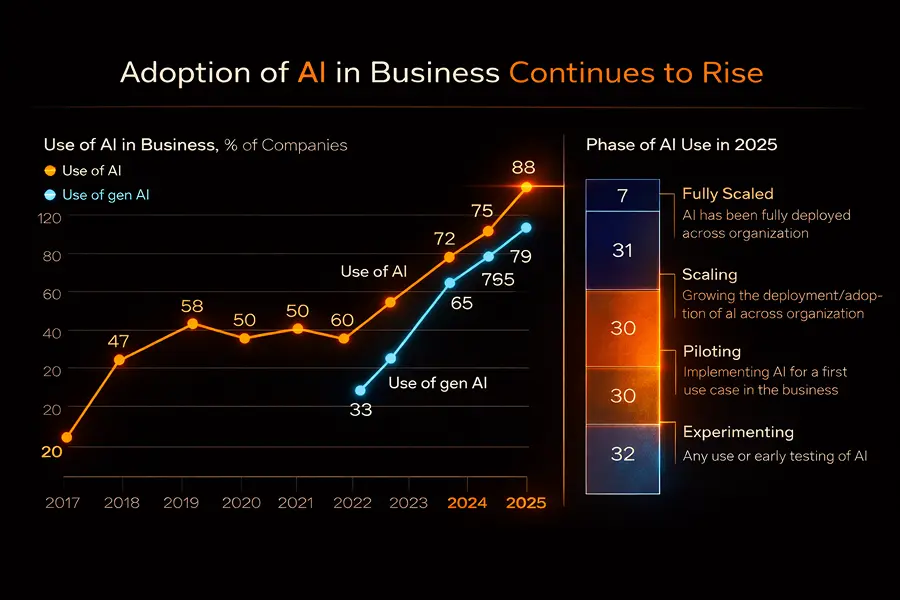
Table of Contents
How AI Agents Deliver Industry Benefits – Making the Leap to Intelligent Systems
AI agents are intelligent software systems that can pretty much handle tasks and help guide decisions with a minimum fuss from humans – that is to say, they require minimal human intervention. Unlike the traditional automation that just repeats the same old actions, AI agents can digest loads of different inputs, adapt to new information as it comes in, and even plan out a series of actions in order to hit specific goals. This makes them particularly useful in industries where the workflow is always changing, data is bursting out all over the place, and decisions need to be made quickly.
The Real Value of AI Agents – What They Can Do For Your Business
- Taming the Beast of Data: AI agents can sort, analyze, and summarise huge datasets for your teams, helping them make informed decisions based on solid facts.
- Decision Support: They can pop up and say “Hey, here’s what you should do next”, “Watch out for this anomaly”, and “This might be a good way to go about doing this task”, whether the task is a routine customer support issue or a complex procurement workflow.
- Freeing You Up: AI agents can take care of emails, scheduling appointments, sending reminders, and all the other little jobs that take up staff time, so your team can focus on the important stuff.
- Streamlining Your Workflow: Agents can even smooth out the process of working between teams, so deadlines get met and operations run smoothly.
A recent survey showed that a whopping 64% of businesses that use AI agents report they’ve benefited from innovation, while 39% say they’ve seen real payback in terms of revenue. And the companies that do it right – who integrate agents into the workflow in a thoughtful way (often by redesigning how they do things to work alongside AI) – tend to be the ones that get the biggest gains in efficiency, scalability and consistency.
How AI Agents Help You Make Decisions – The Role of the AI in Decision-Making
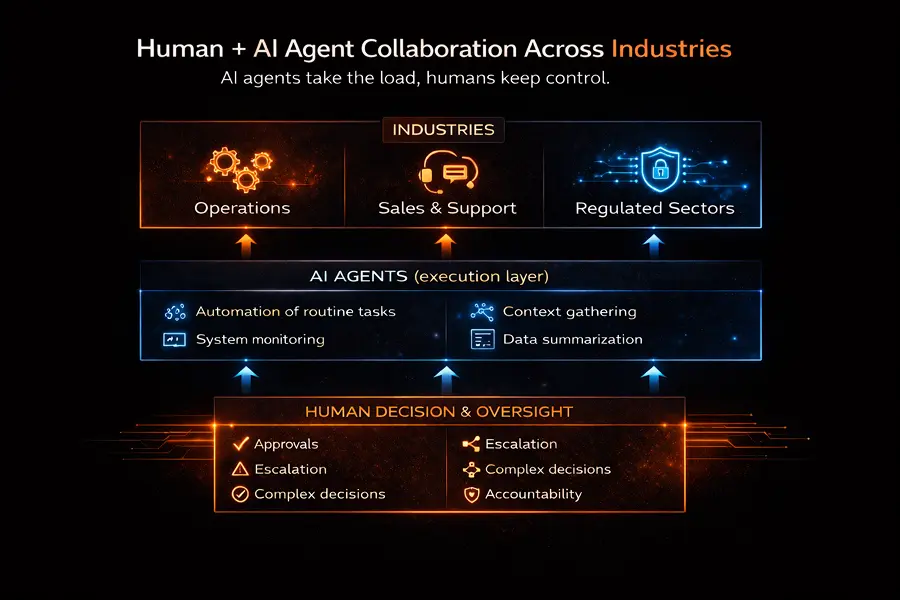
AI agents are generally there to be decision helpers, not the decision-makers. What that means is they collect data, figure out what it’s saying, and then come up with some suggestions, but the final call is always with the human. This way you get the benefit of speed, consistency and reliability – especially when you’re dealing with big datasets or repetitive decisions.
But – and there is a but – there are also limits to what AI agents can do. They’re only as good as the rules and constraints you set for them. If your rules are poorly defined, you might end up with decisions that are technically correct but don’t actually work in the real world – for example, you might be able to speed things up but at the cost of ignoring cost or compliance issues. So your rules need to be well defined and you need to keep a close eye on how the AI is performing.
The Importance of Human Oversight in AI Systems
Human oversight isn’t optional, it’s essential to getting the best out of your AI systems. Agents can do the repetitive tasks, while you approve the exceptions that come up, resolve any conflicts that arise and make sure the workflow adapts to changing business needs. This combo of human and AI lets you scale up your operations, keep to the rules and build trust with your customers in your AI systems.
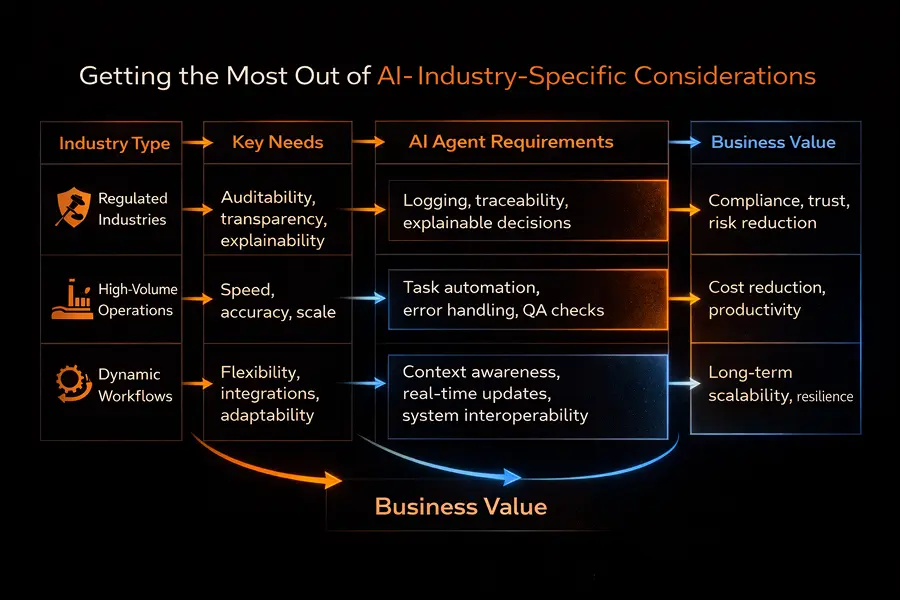
Getting the Most Out of AI – Industry Specific Considerations
The success of AI agents all depends on the particular industry you’re in:
- In regulated industries (think finance, healthcare, insurance) you need to be able to audit and track what’s going on, and to explain what your AI systems have done.
- In high volume operations you need AI agents that can automate repetitive tasks without compromising on accuracy.
- In dynamic workflows you need AI agents that can adapt to changing inputs and to work smoothly with the systems you already have in place.
If you take the specific needs of your industry into account right from the start, you can deploy AI agents that are not only effective today but will still be up to the task in the future.
What We’ve Seen Happen in the Real World
When done right, custom AI agents can:
- Reduce the amount of manual effort required and ease operational bottlenecks.
- Standardise processes and make them more consistent.
- Allow decisions to be made more quickly without compromising on compliance.
- Let staff focus on higher-value activities.
In practice, the best AI agents are the ones that are designed to fit in with the way you do things, rather than the ones that try to add in lots of bells and whistles for their own sake. Companies that get the most out of their AI capabilities are the ones that prioritize things like stable performance, predictable behaviour and seamless integration with their existing systems.
AI Agent Development Companies vs General Development Shops
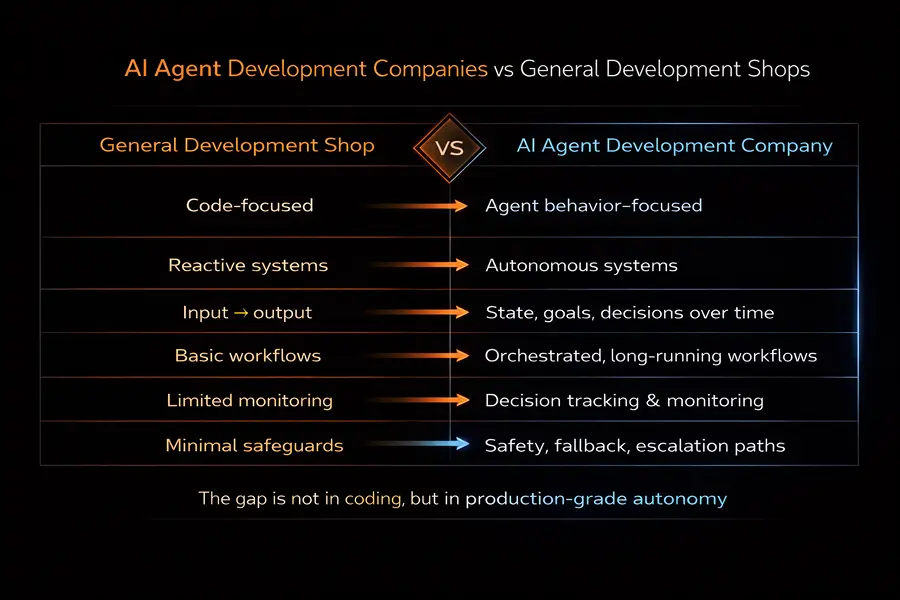
Not every software team has the right skills to build an AI agent platform. It’s not just about being able to code. The key difference is in how intelligent agents systems behave once they’re live, day in and day out.
What Typically Gets Built By AI Agent Companies
When you work with an AI agent development company, you’re usually getting systems that actually act on their own, rather than just responding to inputs. That means they’re working on agent logic, state management, and integrating with all the necessary data sources. Moreover, they are setting up monitoring mechanisms to track decisions over time.
They design workflows where your software can stop, reassess, and then carry on based on new information coming in. This takes a lot of experience in orchestration, error-handling, and dealing with long-running processes. They need to understand how agents interact with people and other systems in actual production environments.
When a General Development Shop Isn’t Enough
While a general development company might be able to deliver a working application, it might struggle when it introduces some autonomy into the mix. AI agents need those extra layers of safety, fallback logic, and clear escalation paths – without those, small errors can quickly start to add up.
Plus, if the system needs to coordinate across departments, trigger actions in multiple tools, or make recommendations that affect revenue or compliance, then you really need some specialized experience.
What Tells You You Need A Specialized AI Agent Development Company
Some common signs are when your workflows keep changing, your decisions depend on real-time data, or your processes can’t be fully defined in advance. If your system needs to be able to adapt and adjust rather than just following a script, then you’re probably beyond what a traditional development company can handle.
The Key Services You Need From A Top AI Agent Development Company
AI agent development isn’t just one task to tick off a list: it’s a combination of design, engineering, and operational planning.
AI Agent Design and Architecture.
This is where you define how your agents think and act. It’s all about setting clear goals, defining decision boundaries, access rules, and interaction models. Good design stops your agents from getting over-ambitious and makes their behavior predictable in real-world conditions.
AI Agent Development and System Integration.
Agents don’t usually work in isolation; they connect to all sorts of systems, like CRMs, ERPs, ticketing systems, data warehouses, and so on. Integration work is about making sure your agents can safely read from and write to all these systems, with proper logging and access control, of course.
Smart Automation For Repetitive Business Processes.
Many agents are used to handle complex tasks that happen hundreds or thousands of times per week – data validation, status updates, internal requests, and report generation, for example. Automating these tasks is incredibly practical, measurable, and easy to evaluate.
AI Agents For Handling Phone Calls and Customer Interactions
When it comes to voice-based agents, there are a few extra considerations. You need to be able to handle interruptions, unclear input, and escalations all in one go.
Inbound Phone Calls
Inbound agents usually handle call routing, gather some basic information, and check status. They help reduce wait times and give human agents some context before they get involved.
Outbound Phone Calls
Outbound agents are used for reminding people, sending confirmations, and following up – and these systems need to be tightly controlled, with clear scripts, compliance checks, and opt-out handling all built into the workflow.
Top AI Agent Development Companies in 2026
To help businesses navigate the AI agent landscape we used a consistent framework that focuses on real world deployment success. We assessed each company across six dimensions: agent autonomy, integration depth, governance and control, time to production, scalability and maintainability, and best fit use cases. In doing so we highlighted not just technical power, but also how agents perform in actual business workflows – the difference between piloted success and real world impact.
1. ProductCrafters
ProductCrafters stands out by striking a balance between smart autonomy and control over operations. Our AI agents can be easily dropped into complex workflows, and scale across departments without losing control or predictability.
What really sets us apart: We build AI agents with deep customization, reliable scaling, and strong oversight, which makes our AI agents a natural fit for those business that are constantly evolving.
2. Accenture
Accenture really come into their own in big enterprise deployments, especially for the big players that need a push into compliance and process reliability. Their agents are tough and suitable for highly regulated industries.
Why they’re held in such high regard: Their combination of consulting know how and multi cloud implementation capabilities means they can get big roll outs done smoothly.
3. IBM (Watson)
IBM’s Watson powered agents are top notch when it comes to stability and auditability – they’re the go to for organisations where governance, traceability, and compliance are paramount.
Key advantage: These agents can be dropped into complex, hybrid cloud environments and still meet the strict regulatory standards.
4. Microsoft
Microsoft’s agents are built in to MS 365, Azure and Dynamics which allows for quick deployment and seamless use within existing systems. No messing around trying to get them to talk to each other.
Not to be sniffed at: They’re a great fit for organisations already embedded in the MS ecosystem – fast and predictable adoption.
5. Google Cloud
Google’s Gemini AI agent platform is a superstar in data heavy, analytical environments. They can crunch big inputs to get actionable insights.
What really sets them apart from the pack: Ideal for businesses that need AI assistants that can reason over big volumes of info.
6. AWS
AWS brings game changing cloud native, scalable agents that are super flexible. They can be dropped into large organisations with variable workloads and deep service integration.
Why people love them: Their scalability and tight AWS ecosystem integration makes their AI agent platform a no-brainer for cloud first enterprises.
7. Deloitte
Deloitte agent builder brings AI expertise and industry consulting together. Their agents are real game changers in enterprise transformation programs, especially where integration, change management and measurable outcomes are key.
What they do best: They ensure that AI adoption is aligned with the broader business goals and strategy for that company.
8. TCS
TCS focuses on global scale automation delivering agents that can keep up across multinational operations.
Thing they do well: They’re well suited to organizations that need standardized AI processes across different regions, though their implementation may be a bit slower.
9. Cognizant
Cognizant specializes in BFSI and healthcare sectors, integrating business process knowledge with AI for highly structured environments.
Why it works: Their specialized agents perform best in regulated domains requiring careful alignment of automation with business rules.
10. Infosys Nia
Infosys Nia focuses on IT operations and enterprise automation, blending RPA with intelligent AI agents for operational efficiency.
Unique edge: Effective for organizations that want to optimize existing systems without extensive redevelopment.
Taken together, these top AI agent companies show how AI agents are moving from experimentation to real impact in business operations. By automating repetitive tasks, supporting decision-making, and integrating seamlessly with existing systems, they help organizations work smarter, scale faster, and focus human talent on higher-value initiatives
Real World Benefits of AI Agents Across Industries
AI agents are most effective in operations when they take some of the weight off human shoulders, rather than making high-stakes decisions themselves. They can handle all sorts of mundane tasks, like routing tickets, keeping an eye on systems, processing internal requests, and putting together routine reports. By automating these mind-numbing tasks, they cut down on the number of handoffs and speed up the whole process.
For internal support teams, agents often act as the first line of defence, gathering context, noodling up relevant information, and getting actions lined up for human approval. This means resolutions happen faster and recurring issues are dealt with more consistently – particularly in high-volume teams.
Working Smarter in Sales, Support, and Phone Call Automation
In sales and customer support, AI agents help teams stay on an even keel and keep things moving at a steady pace. For incoming calls, support agents can handle standard questions, qualify requests, and collect some structured data before passing the buck on to a human with all the context intact.
Outbound agents help with follow-ups, appointment confirmations, and status updates. The goal is to free up humans from doing the same old repetitive tasks so they can focus on building relationships and tackling the tricky stuff. But of course, they have to do it all with clear rules, scripts, and escalation paths in place to make sure they stay on track and follow the rules.
Supporting Decision Making in Tightly Regulated Industries
In sectors like healthcare, finance, and insurance, AI agents don’t get to make the final call. Instead, they help out with decision-making by summarizing records, flagging up anomalies, and generating recommendations based on a set of predefined criteria.
Their value is in speeding up processes without sacrificing consistency. Because of this, people in heavily regulated sectors tend to care more about auditability, traceability, and explainability than sheer brainpower, which is why adoption may take a little longer, but is more likely to stick in the long run.
How Industry Constraints Shape AI Agent Design
Data privacy, compliance requirements, and operational risk are the things that really determine what an agent can get access to, how approvals are recorded, and how much freedom it gets to make its own decisions.
Because of these constraints, AI solutions can’t just be copied and pasted from one industry to another. Teams that take regulatory and operational limits into account from the start will end up building agents that stay effective and adaptable long after they’re deployed.
What Defines the Best AI Agent for a Specific Use Case
There is no universal definition of the best AI agent. What works well for a support team may fail completely in finance or operations. In practice, the quality of an AI agent is defined by how closely it matches a specific workflow and how reliably it performs within real operational constraints.
This is also why selecting an AI agent development partner starts with clarity around use cases and technical requirements. Without that grounding, even well-built agents tend to miss the mark once they are exposed to real users and real data.
Companies that succeed with AI agents rarely chase the most advanced features. Instead, they prioritize predictable behavior, stable performance, and clean integration with existing systems. This is where experienced AI agent companies add the most value, translating concrete business needs into agent behavior that holds up in day-to-day operations.
Performance, Reliability & Context Awareness
Performance isn’t just about how fast you’re going. In the business world, an AI agent needs to deliver the same results, whatever the conditions: be it incomplete data, unexpected inputs, or edge cases, without breaking the workflow.
Reliability counts for even more than that. An agent that gets it right most of the time but fails silently when the workload is heaviest will quickly start to lose trust. In reality, strong agentic teams design agents with monitoring setups, fallback logic, and clear error handling so they can see and manage any issues that come up.
Context awareness is what makes the difference between a useful agent and some scripted automation. A decent AI agent knows where it is in a process, what has happened so far, and what constraints are affecting it. This lets it adapt its actions rather than just blindly executing tasks.
Integrating The AI Agent with Existing Business Systems
The best AI agents usually don’t operate on their own in some sort of bubble. They’re inside big ecosystems of CRM/ ERP data warehouses, ticketing tools, and internal APIs. If integration is weak, even a well-designed agent can become a source of operational friction.
Multiple AI agent companies make a big effort to make sure their system is compatible with all the others. This includes things like authentication data synchronization, permission management, and making sure they don’t slow down the rest of the system. They also need to respect business rules that are already built into the legacy system rather than try to override them.
Most organizations say that a smooth integration is the difference between a pilot that takes off and one that stalls.
Why “Best AI Agent” Depends on Workflow, Not Features
Feature lists are easy to compare. Workflows are harder. The best AI agent for a company is the one that fits naturally into how teams already operate or how leadership wants those operations to evolve.
An agent designed for decision support in finance looks very different from one handling inbound phone calls or managing internal knowledge requests. AI agent companies that start with workflow mapping instead of model selection tend to deliver better long-term results.
Picking a Long-Term AI Partner
Choosing an AI agent company is so much more than just a one-time technical decision – it’s about building a partnership that will shape your whole business. It’s about how your data flows, how your internal processes are handled, and how your business operates over time.
Getting too caught up in just the upfront costs or that killer demo can set you up for problems later on. When your system starts to grow or needs to adapt, you don’t want to be in a world of pain. A better approach is to take a good, hard look at the company’s delivery model, their technical chops, and what kind of support they’re going to give you after the launch.
Figuring Out Who Does What. Delivery and Technical Scope
AI companies vary a lot in how hands-on they are. Some just hand over a single agent, while others build a full-on decision-making system that spans multiple departments.
Before you commit, you need to know exactly what you’re getting into. Ask yourself:
- How are they going to map out your business workflows and make sure the agents fit like a glove?
- Who’s going to select, train, and fine-tune the models for you?
- How are they going to integrate the agent with your existing systems?
- Are they going to handle the security, compliance, and regulatory stuff?
- Who’s going to keep an eye on the agent after it’s live, and make sure it’s still running smoothly?
Knowing exactly what to expect beforehand is a great way to avoid any nasty surprises down the road.
What to Expect Once Your AI Agent is Live
Once your AI agent is up and running, it’s not going to run itself perfectly – you’ll need to keep tuning it, updating it, and sometimes even redesigning it as your business evolves.
A top AI company should be able to plan for all that, right from the get-go. They should be keeping an eye on performance, talking to actual users, and adjusting the logic or integrations as needed.
This is especially important for agents that are involved in decision-making or customer interactions. Without this kind of ongoing support, even a well-built agent can start to fall out of sync with your business.
What to Ask Before You Choose a Vendor
Before you sign on the dotted line, make sure you know how the company handles the real world. Some important questions to ask include:
- How do you measure how well your agent is doing in real-world environments?
- What happens if your agent starts doing something weird or fails?
- How do you deal with changes to your business processes after you’ve already deployed the agent?
- Who actually owns the data, the models, and the intellectual property?
Getting clear answers to these questions will give you a good idea if the vendor is on the ball in terms of operational maturity, or if they’re just a bunch of technical geniuses with no clue about how to make it all work.
Staring an AI Development Project
The majority of AI agent projects fail not because of the tech itself, but because they were embarked on with muddled goals. To avoid this, getting your scope and expectations right from the start makes all the difference – between having a carefully rolled out project and a stalled one that never takes off.
Companies developing AI agents often end up spending as much time planning as they do coding alongside it. And that upfront work pays for itself in the long run – saving time and cost.
How to Define Scope Properly Before You Start Coding
Scope is what your AI agent will – and won’t – do. This includes tasks, decision limits, access to data, and the rules for escalating issues.
Starting with a super-narrow scope is essential. It makes your agent a heck of a lot easier to deploy, test, and actually trust. Many businesses start by building an AI agent that can handle a single task – say, scheduling, reporting, or handling a specific type of request. Once they see the value that’s been added, they can expand its scope from there.
Having a clear scope helps you estimate the cost and avoid over-engineering.
How to Make Your AI Agent Fit In With Business Operations
Your AI agent should work like your business – not the other way round. This is about finding a natural flow of communication, decision limits that make sense, approval chains, and compliance rules that align with your business.
Working with experienced AI agent development companies, you can make sure that the operational logic gets translated into the agent’s behavior. This, in turn, reduces the resistance that your teams might put up and gets your agent adopted consistently.
First Decisions that Affect Cost and Reliability
Some of the early technical choices you make will determine the long-term outcome of your project. Think about your data sources, hosting environment, how deep you integrate, and the tools you choose for monitoring – all of these factors will have an impact on reliability and maintenance cost in the end.
Working with a reputable AI agent development company from the start can give you access to tried and tested patterns and help you avoid costly rework down the line. The end result is an AI agent that grows with your organisation, not just another tool that’s left behind.
Conclusion
AI agents are actual teammates that help make your business hum along more smoothly. By taking care of all those dull, repetitive tasks, crunching through data and generally helping you all make faster, more informed decisions, they free up your team to focus on the good stuff. But the real magic happens when these agents just sort of slot together nicely with the systems you already use and when you’ve got a partner who speaks both tech and business fluently.
With workflows that make sense, tailored AI solutions that actually work for you, and some real smarts in the analytics department; it turns that automation into actual, tangible value rather than just a bunch of jargon about “efficiency” and “synergy”. What it means in real terms is a lot fewer errors, a lot more time up your sleeve, and a whole lot of space to try new things. Our AI agents can help your business grow and adapt too. Give us a call and we’ll tell you all about it