



Marketing teams are under huge pressure these days. Campaigns across multiple channels demand constant attention, customer expectations are shifting constantly, and performance targets keep ratcheting up – while the team itself often feels stretched to the limit. According to research work done by McKinsey on the use of generative AI in marketing and sales, leaders are expecting a significant impact from AI in areas such as lead identification, campaign optimization, and personalization – as mentioned on McKinsey.com.
These are the tasks where AI really comes into its own. They take performance data, apply machine learning to crunch it in real time, and give you insights that are much fresher than anything you’d get from weekly reports. And on top of all that, they can act on the context, taking in data from loads of different sources, tracking customer behaviour as it changes, and making suggestions like changing ad spend, fine tuning the messaging, or responding to customer feedback.
We’ll walk through how AI agents fit into a marketing team’s daily work, where they actually help, and what you need to set up so they run smoothly without messing up the systems you already rely on.
Table of Contents
Understanding AI Marketing Agents in Your Team
As marketing teams scale, manual processes quickly become a bottleneck. AI agents step in to automate these workflows, adapt in real time, and operate as always-on extensions of your team.
What Marketing AI Agents Are and How They Work
Marketing AI agents are autonomous software programs that handle all the marketing tasks from start to finish. Unlike traditional tools that need manual input or have a rigid workflow, these agents can analyze customer data, spot trends, and take action across campaigns with no human input. They’re actively working on marketing tasks, helping teams focus on strategy, creative work and decision-making rather than putting in the same old repetitive marketing efforts.
AI marketing software can keep an eye on campaigns, spot where they are underperforming and make adjustments proactively. They work in the background all the time, learning from performance metrics and customer behaviour to get better and better at targeting, messaging and getting the right content on the right channels over time. This makes them a lot more dynamic than static marketing tools.
How AI Agents Differ from Chatbots, Copilots, and Automation Platforms?
It’s easy to get AI agents mixed up with traditional marketing automation tech. Chatbots are basically there to handle customer interactions in real time. AI copilots can help with content generation or do some analytics work, but still need a human to steer to get anything done. And marketing automation tools will just execute some rules you’ve set out beforehand to schedule posts, send emails or manage some simple workflows.
An AI marketing agent goes way beyond that. They can combine analysis, monitoring and action-taking in data from loads of different sources and make decisions on their own – no constant human input needed. Which means they can optimize campaigns, get the messaging right on the channel that matters and manage engagement across loads of channels without any human help.
| Tool | What It Does | Key Difference |
|---|---|---|
| Chatbots | Manage customer messages in real time | Focused only on conversations |
| AI Copilots | Help with content or analytics tasks | Needs human guidance to act |
| Marketing Automation | Run scheduled workflows like emails or posts | Follows predefined rules without reasoning |
| AI Marketing Agents | Analyze data, optimize campaigns, personalize messaging, and act autonomously | Combines multiple functions and makes proactive decisions across channels |
From Data to Actionable Insights
The real value of AI agents comes in their ability to turn data into actual actions. They can crunch CRM records, email engagement, website interactions, social signals and behaviour across loads of different platforms. By doing so, they can identify the right audience, predict what is likely to appeal and get the targeting right in real-time.
For example, an AI agent can see an emerging trend in user behaviour – a group that is definitely showing a high purchase intent – and automatically adjust the ad targeting or messaging in response. This combination of insight generation and taking action frees up your marketing team from all that repetitive work while helping them keep the messaging right on the button.
Types of AI Marketing Agents for Campaigns
Before choosing the right automation for your team, it’s important to understand how different AI agents operate. Each type serves a specific purpose in campaigns, from instant reactions to long-term optimization.
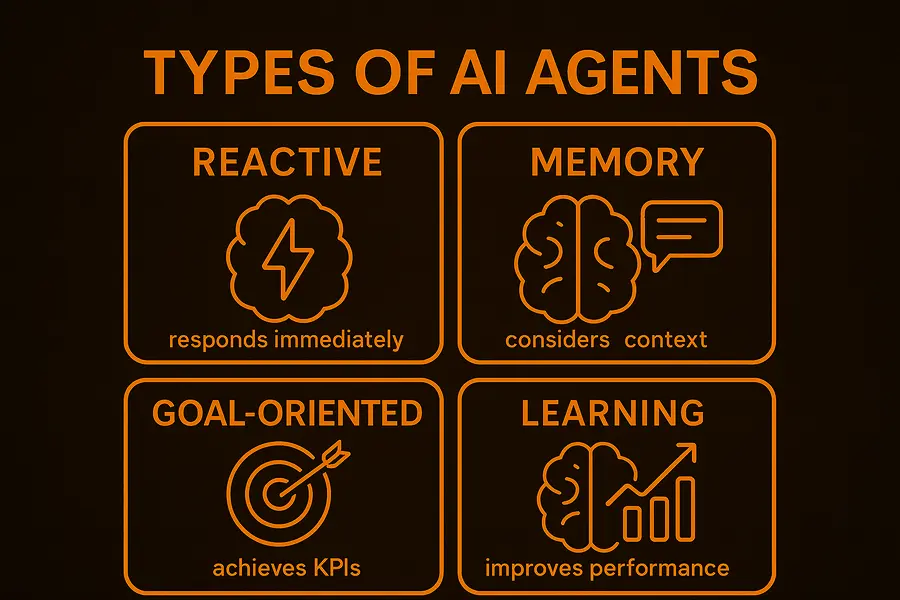
Reactive Agents
A Reactive Agent is a basic autonomous AI agent that responds to what’s happening right now without remembering anything from the past or planning for the future. This means they’re perfect for simple tasks like using conversational tools to field customer queries on a variety of channels. IBM puts it in a nutshell: they “just respond to current inputs, no memory,” and that’s basically it. You might come across a reactive agent in action if Brand mentions or a social post gets slammed with comments; they trigger an alert to the campaign team, and this helps streamline social media management.
Limited Memory Agents
We then have Limited Memory Agents, which can recall stuff from the recent past, enabling them to make better decisions – sort of. They can analyze data in real time and remember recent results. They don’t retain that memory for too long, though. Denser.ai sums it up pretty well : “Limited memory AI – Systems that learn from past data temporarily.” Essentially, a marketing agent with limited memory will analyze recent open rates for email campaigns and adjust send times – helping overall performance – but still relies on some human input.
Goal-Driven Agents
Goal-Driven Agents take a more deliberate approach – they’ve got a specific goal in mind and then figure out the steps needed to achieve it. They’re not just reacting to things – they are actually anticipating what needs to be done. These are sometimes called “goal-based agents” – IBM says they’re just systems that “can plan and execute multi-step tasks”. In digital advertising, you may use a goal-driven agent to boost conversions, tweak targeting, budget and ad content effectively.
Learning Agents
With Learning Agents, we constantly improve based on what customers say and what new data we collect. They get smarter with time and are better at dealing with more and more scenarios. Because of this, IBM likes to say they “continuously refine strategies using new data, reinforcement learning and adaptive reasoning”. Learning agents analyze how customers behave online and what they like, so team members can refine marketing strategies and create more personalized experiences.
Custom AI Agents and Multi-Agent Marketing Workflows
Not all situations are a good fit for one single AI agent. In some cases, teams need to build custom workflows where different AI agents work together to handle different bits of a job, such as handling audience segmentation, content creation and performance analysis. This is a collaborative AI-powered model where each agent focuses on its own task while still working as part of a shared workflow. Deloitte describes a multi-agent AI system as multiple autonomous agents with specific skills that operate together toward a common goal. In marketing, this often looks like one agent managing outreach, another adjusting ad budgets in real time, along with tailoring content for each channel.
AI Agent Type How It Works Marketing Example Reactive Responds to immediate inputs; no memory Automatically managing common customer inquiries on social media Limited Memory Remembers short-term context to improve decisions Adjusting email send times based on recent open/click rates Goal-Driven Plans actions to achieve specific marketing objective Optimizing a campaign to increase conversions by the end of the quarter Learning Continuously adapts from feedback and new data Analyzing multi-channel engagement to refine content strategy Multi-Agent Multiple agents collaborate to handle complex workflows One agent handles influencer outreach, another optimizes ad spend, and another personalizes content
What Agentic AI Actually Does in Marketing: Ten Things You Notice Immediately
Once you understand the different types of agents, the next question is what they actually do inside a real marketing operation. Here are ten things you start seeing as soon as you introduce agentic AI into your digital marketing routine. This is coming from hands-on experience, not theory.
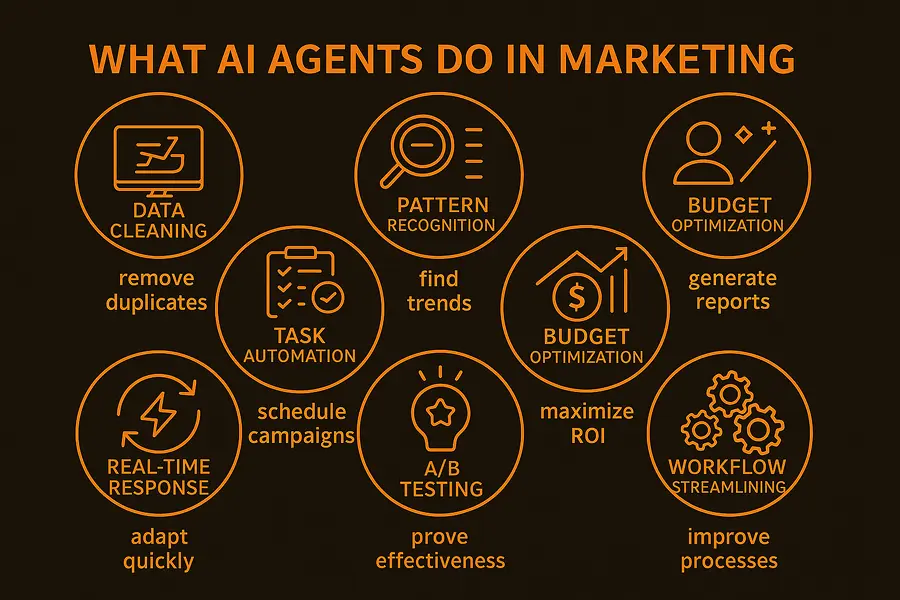
1. They clean up your data chaos and make it usable
Every marketing team says they want to be data-driven. Few have the time to clean CRM fields, unify analytics platforms, extract relevant data from social channels, and sync it all with internal tools.
AI-powered agents do this in the background. They pull data from CRM, Google Sheets, email platforms, search engines, social insights, and even raw exports.
Suddenly, you can analyze customer data without spending half your week in spreadsheets.
Example: We use an agent that merges CRM data with search intent signals to adjust targeting for weekly ad campaigns. It saves hours of manual tasks.
2. They spot patterns before your team even talks about them
Agents that can understand context pick up on behaviour-based trends the same day they appear. They notice a shift in what people search for, a drop in campaign performance, or a spike in interest for a niche topic. Using AI tools, you get data-driven insights while it still matters.
Some AI agents, for instance, scan social conversations and identify trending topics for content creation before competitors catch on.
3. They personalize content automatically
Tailoring messages for each audience used to take a lot of back-and-forth. Now an agent can adjust social posts, landing pages, email campaigns, and nurture sequences for different groups without slowing your team down. It keeps personalization consistent and scalable without adding more people to the mix.
Example: You could use agents that rewrite email intros for each segment based on personal preferences and past interactions.
4. They Run Campaigns Like a Live Performance Analyst
Agents keep analyzing performance data and optimizing campaigns in real-time. They adjust targeting, pause weak ads, test new creatives, and shift budgets to where the conversions are rising.
It’s like having a live performance command centre inside your marketing operations – minus the coffee machine and late-night conversations about strategy.
Think of Google Performance Max on steroids – with more context, of course. Our agents even consider pricing strategies, competitor activity, and seasonality.
5. They Take the Boring Tasks off Your Plate
There’s a long list of tasks that marketers do daily that are just plain time-consuming – pulling reports, tagging contacts, updating sheets, writing briefs, resizing social media content, or generating content variations.
Agents automate all these processes, freeing up your team to focus on what really matters – not getting bogged down in the minutiae.
6. They support your creative work instead of replacing it
AI marketing tools are not here to fully replace human marketers. They help teams with the content creation process and accelerate decisions. Agents can generate first drafts, reorganize ideas, create new angles for campaigns, and even assist with the video creation process. You still guide the voice and direction, but the grunt work is handled.
7. They Boost Lead Qualification and Reduce Wasted Effort
Agents can look at behaviour-based signals, engagement history, website flows, and CRM notes to qualify leads accurately – meaning your sales team can focus on the good stuff, not endless unqualified prospects.
You could use an agent that monitors user behaviour across multiple channels and flags leads that are ready for outreach. It can increase your leads by a noticeable margin every month.
8. They add real competitive intelligence to your workflow
Agents monitor market shifts, competitor messaging, keyword changes, and updates across search engines. This is something teams rarely have time for. With an agent, it becomes part of your daily decision-making.
9. They help you understand the full customer journey
By integrating data from various sources and tools, agents build a real view of how people move from interest to purchase. This means you can make strategic decisions based on what is truly happening instead of relying on assumptions.
Example: One of our agents maps the journey by combining chatbot conversations, email engagement, and campaign activity. It exposes gaps we used to miss entirely.
10. They plug into your existing workflows without breaking anything
This part surprises most teams. AI agents integrate directly with your existing suite of marketing tools.
They work with WordPress, HubSpot, Google Sheets, social schedulers, internal email platforms, and even experimental AI development tools. You do not need to rebuild your business processes to deploy AI. They fit into what your team already uses and make it more efficient.
The Inside Story on Marketing AI Agents: Behind the Screens
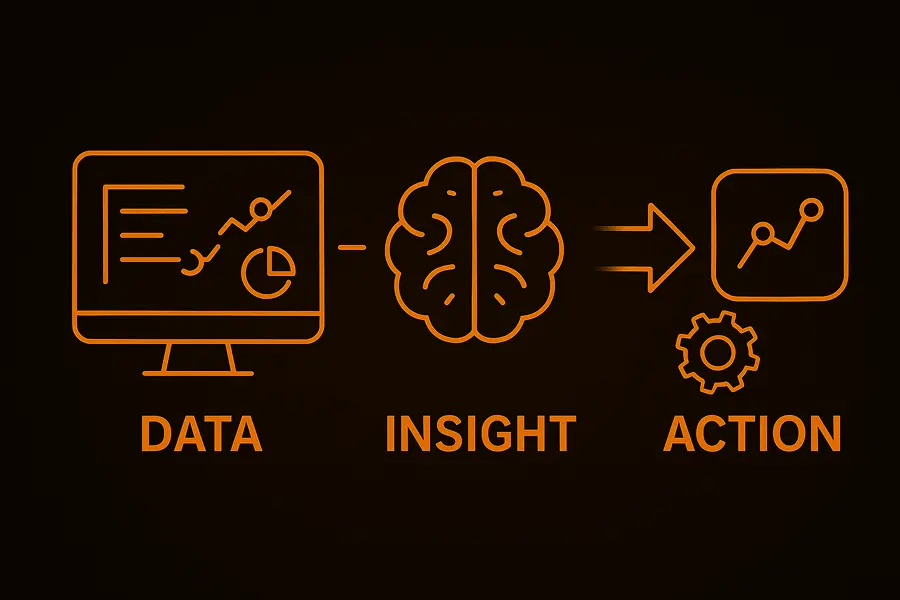
From the outside, AI marketing tools can seem like complex beasts, but the inner workings are actually pretty straightforward once you get down to the basics. Each one of these AI agents follows the same basic routine: it gathers data, figures out what that data means, and then acts on it through your existing marketing setup. Think of it as a high-powered AI assistant designed to cut down on busywork, not just add to it.
1. The Data Layer: Where It All Starts
At the heart of every decision is some relevant data. Then agents go out and get it from anywhere they can. They’ll take in customer data from your CRM system, email marketing tools, analytics platforms, social media posts, ad campaigns, and even random internal tools like Google Sheets. They’ll also scoop up external signals like market changes, what the competition is up to, or trending topics in your industry.
Because these agents are operating on a massive scale and working with a bunch of different channels at once, you get insights fast and can make more precise targeting, qualify leads better, and make better strategic decisions.
2. The Reasoning Layer: Finding the Needle in the Haystack
Once the data is in, the agent figures out what it means using AI algorithms, natural language prompts, and predictive models. This is where they get a handle on the context:
- noticing patterns in how your customers behave on a journey
- spotting when a campaign is starting to tank
- identifying people who are showing signs they’re about to make a purchase
- picking up on shifts in sentiment or new topics taking off
Some systems even use retrieval methods, so the agent can go out and get fresh context before it acts. This is what drives the insights that help your marketing really take off.
3. The Action Layer: Putting the Plan into Motion
After figuring out what to do comes the action part. The agent can:
- tweak targeting parameters in advertisement campaigns
- handle customer calls and emails
- update your nurturing campaigns
- personalize landing pages
- generate variations of social media content
- help with video creation
- shift budgets or pause underperforming ads
Because the agent is learning from what happens, each cycle gets a little more efficient and a little less labour-intensive. You see gains in efficiency, get fewer manual tasks to handle, and see better results without having to do more work.
4. Integration: How the Agent Fits In
Agents don’t replace your digital marketing stack, but they enhance it. With strong integration, they plug into your marketing tools, analytics platforms, email systems, CMS tools (like WordPress), and internal business processes.
This is where the model context protocol comes in. It lets the agent interact with your digital marketing tools smoothly, automate the stuff you used to do by hand, and keep everything consistent across multiple platforms and across languages.
The result is a more connected, more intelligent marketing function where AI agents fit in seamlessly and quietly push your campaigns toward better performance, better customer engagement, and higher satisfaction, saving significant time for the team.
Getting AI Agents to Work in Your Marketing: From Easy Setup to Real Results
Before getting bogged down in costs and tools, take a step back and think about what AI marketing agents can really do for you. The main advantage isn’t just about automating everything. It’s about speed, consistency, and knowing what’s going to work. Agents can analyze performance data right now, instead of waiting for those monthly reports, so you can keep your campaigns running like clockwork, boost your ROI, and avoid getting surprised.
They also keep personalization from going stale. AI agents constantly update messaging, recommendations, and timing based on people’s actual behaviour, turning what used to be a mess of separate tools into a smooth, never-ending cycle of improvement.
Starting with the Ready-Made AI Tools You’re Already Using
If your team is already using HubSpot, Salesforce, or Google Ads, start with their built-in AI features. These are easy to fire up, often plug-and-play, and tackle common problems like:
- Scoring leads based on how they’re engaging
- Creating content on autopilot using natural language
- Optimizing ads on the fly with real-time data
This gets you some quick wins with minimal setup hassle.
Building a Custom Agent from the Ground Up
Custom AI agents are a good idea if your digital marketing stretches across multiple systems or if you need to get really deep into your data. The key steps are:
- Get all your data in one place: Toss your CRM, analytics, web, and social data together.
- Work out how the agent makes decisions: Decide how the AI tools will look at KPIs, understand how people are behaving, and pick the right actions.
- Get your multi-agent setup going: Use specialized AI agents for ad targeting, content personalization, and analytics.
- Let the agent learn and improve: Use continuous feedback and reinforcement learning to make the agent better and better.
This takes a bit more time but gives you total control over personalization, campaign logic, and getting all your channels working together.
The Cost of AI Marketing Agents
Ready-made AI features can cost anywhere from a few hundred to several thousand bucks a month. Custom multi-agent setups can be six figures or more. But the real payoff comes from saving your time, speeding up those iterations, and freeing them up to think strategically and be creative.
Read also: How Much Does It Cost to Build an AI Agent?
Making Sure the AI-Powered Agent Fits Your Brand’s Voice
Feeding the data in isn’t enough. Agents need to understand your brand’s tone, voice and audience:
- Use historical campaign copy to get the models right.
- Add some rules to keep things on track and on brand.
- Have a human review the agent’s output at the start to guide it.
AI agents follow a logical process. They start by pulling data from everywhere: your CRM, web analytics, social media interactions, and more. Then they go through that data, spot patterns, and make predictions using machine learning, predictive analytics, and natural language processing. Based on all that, they decide who to target, what content to send, and how much to spend. They keep learning from what’s working and what isn’t, and use that feedback to get even better over time. And then, a human oversight makes sure the output is on brand and on track.
Smarter Marketing Starts Here
AI assistant tools aren’t just more AI marketing software tossed into the stack. They work more like extra teammates who quietly take care of the grunt work that usually slows you down. They sift through huge amounts of data, keep campaigns moving, and adjust your messaging so the right people actually respond. In other words, they leave your team free to focus on ideas, storytelling, and real conversations with real customers.
With the right mix of built-in AI features or a setup tailored to your business, these tools slot into your existing marketing workflow without causing chaos. They turn raw data into strategies you can act on, learn from every result, and steadily improve your campaigns while cutting out a lot of the day-to-day busywork.
Marketers who are doing things right aren’t pushing themselves to the limit or hiring endlessly. They’re using smart systems that help the team work at a steady pace, stay aligned, and create better experiences without burning out.